History
The Story of Lokrum Island Through the Centuries
Grave goods at the Dubrovnik Museum indicate that Lokrum was inhabited since prehistoric times. A fragment of an ancient gravestone and four interlaced relief fragments, built into the south-west part of the former Benedictine monastery, were preserved. Certain records state that Lokrum was settled by the Benedictine monks around 915 A.D.
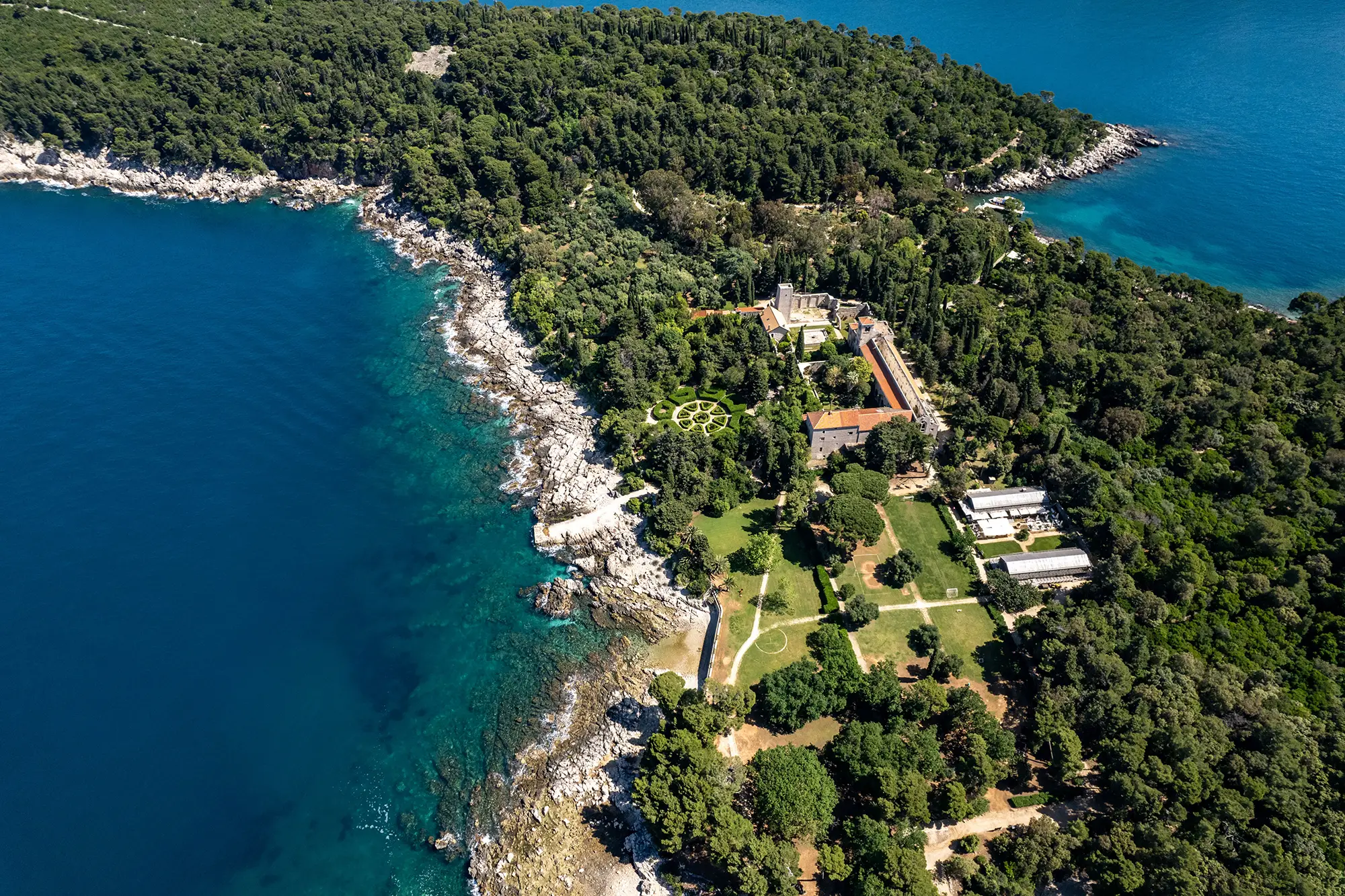
MONASTERY COMPLEX was first mentioned in 1023 as the first of many Benedictine monasteries on the territory of the Dubrovnik Republic. The entire island was owned by the monastery, while the abbey served also as a hospital and an almshouse until the mid-15th century.
The Roman Curia granted the mitre in 1149 to the Lokrum Abbot and ever since then the monastery’s abbots, after the archbishop, are considered the first prelates of the Dubrovnik Church.
The Roman Curia granted the mitre in 1149 to the Lokrum Abbot and ever since then the monastery’s abbots, after the archbishop, are considered the first prelates of the Dubrovnik Church.
The last Benedictines left the monastery in 1798, after selling their estate to a handful of wealthy citizens of Dubrovnik. The sudden end of the centuries-long Benedictine presence on Lokrum must have left a mark, and what better way to remember such an echo than through a vivid legend, one that radiates a touch of mystery and fate.
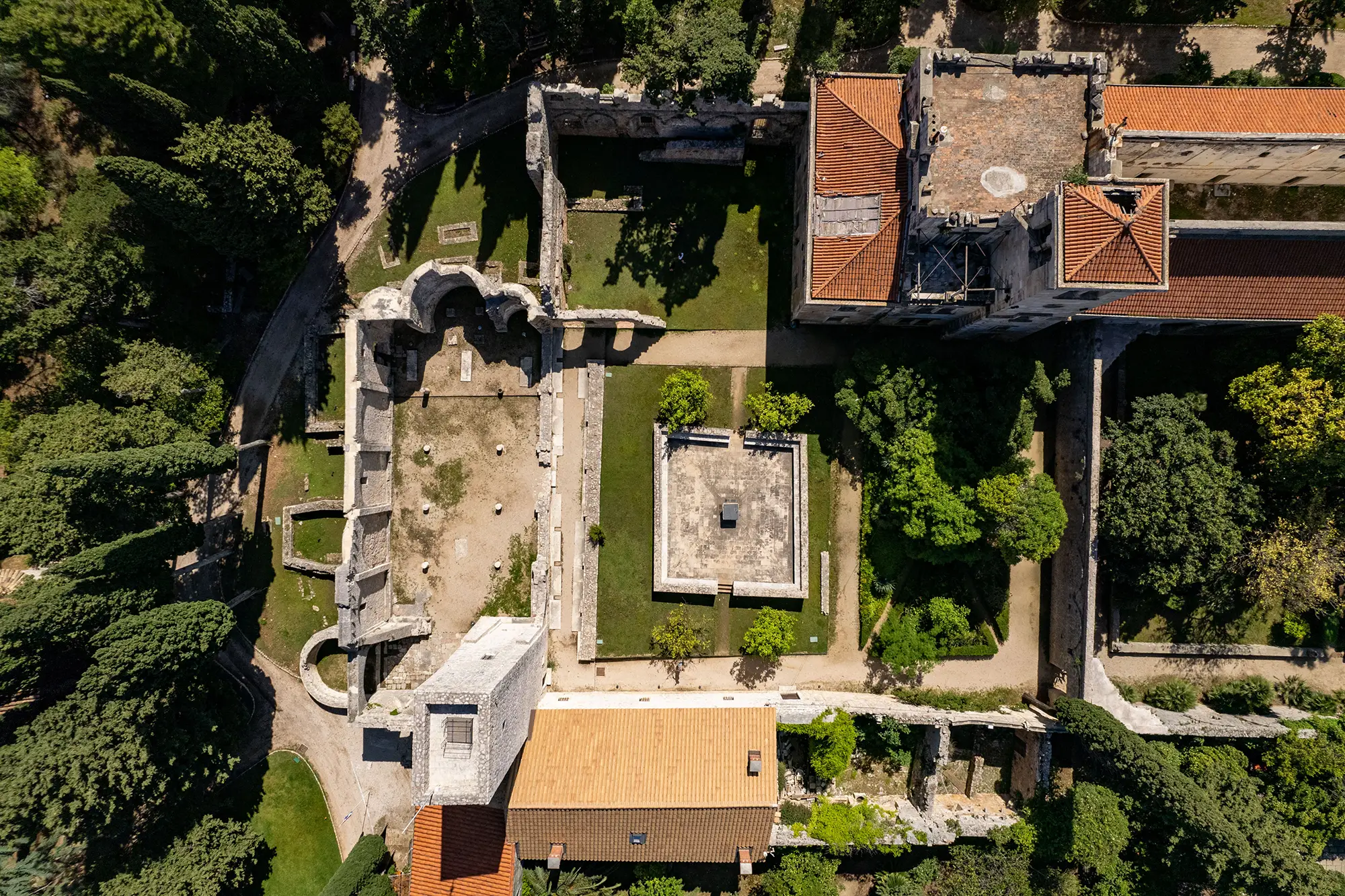
The ruins of the monastery complex are divided into three parts. The most ancient are the remains of the three-nave and triconch Romanesque-Gothic basilica (12th and 13th century), the east and west monastery wing with its tower and a destroyed cloister.
In the 15th and 16th century, a new monastery in the Gothic-Renaissance style was constructed to the south of the old Romanesque one. The west and north wings of that monastery collapsed during the devastating earthquake of 1667, and only two wings with the cloister were preserved.
Over the cloister door a timeless and ever meaningful message is inscribed: CONCORDIA.RES.PARUAE.CRESCUNT DISCORDIA.MAXIMAE.DILABUNTUR
“Harmony makes small things grow, lack of it makes great things decay. ”
Over the cloister door a timeless and ever meaningful message is inscribed: CONCORDIA.RES.PARUAE.CRESCUNT DISCORDIA.MAXIMAE.DILABUNTUR
“Harmony makes small things grow, lack of it makes great things decay. ”
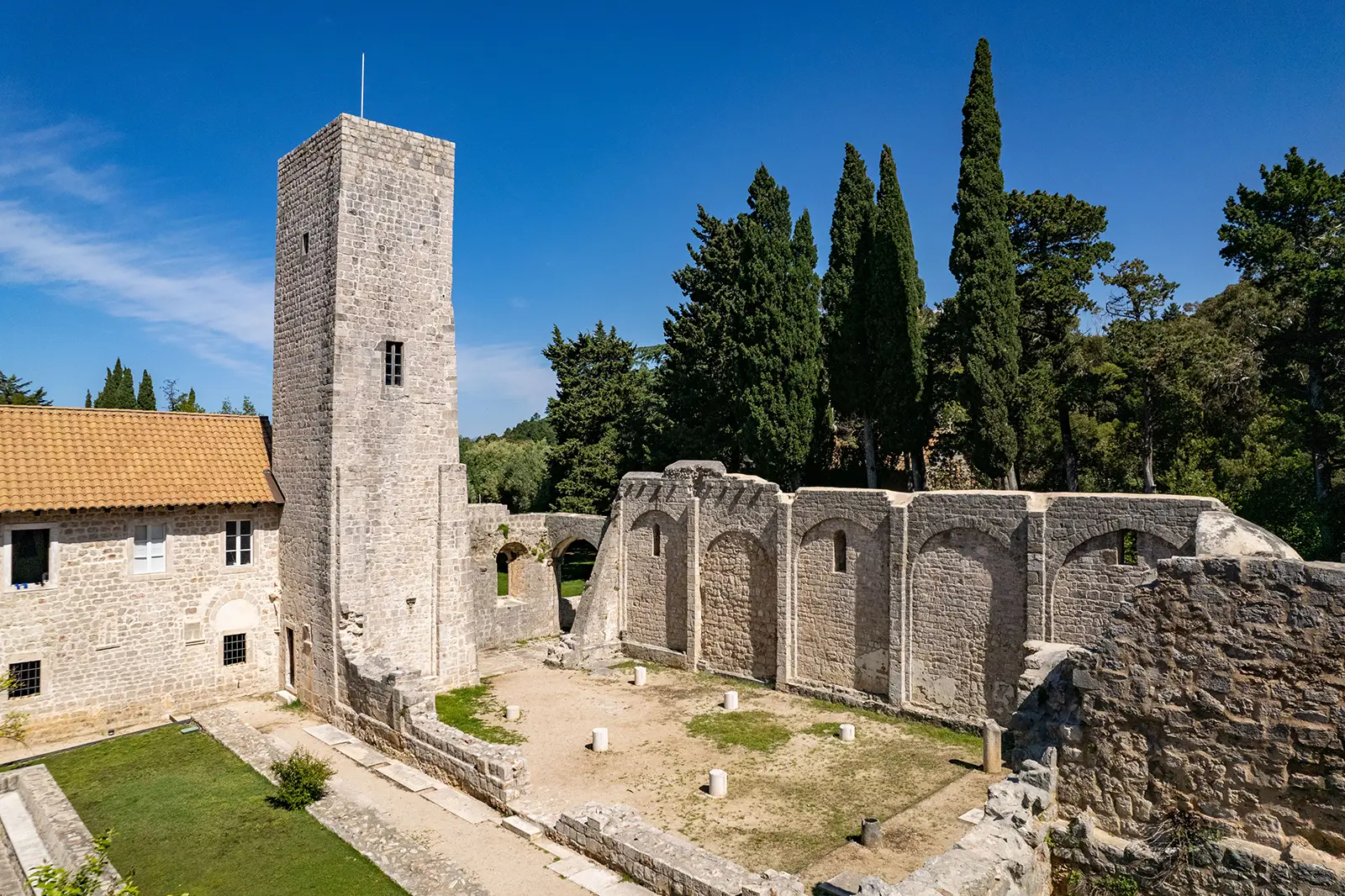
At the beginning of the 1860s, in the south-east corner of the new monastery’s courtyard the summer villa of Maximilian I, the Emperor of Mexico, was constructed.
Built according to the owner’s wishes, where the south section of the east wing of the Romanesque-Gothic monastery used to stand, with a guardhouse, the summer villa is a blend of neo-Romanesque, neo-Gothic and neo-Renaissance elements which reflect the historic architecture of Maximilian’s time.
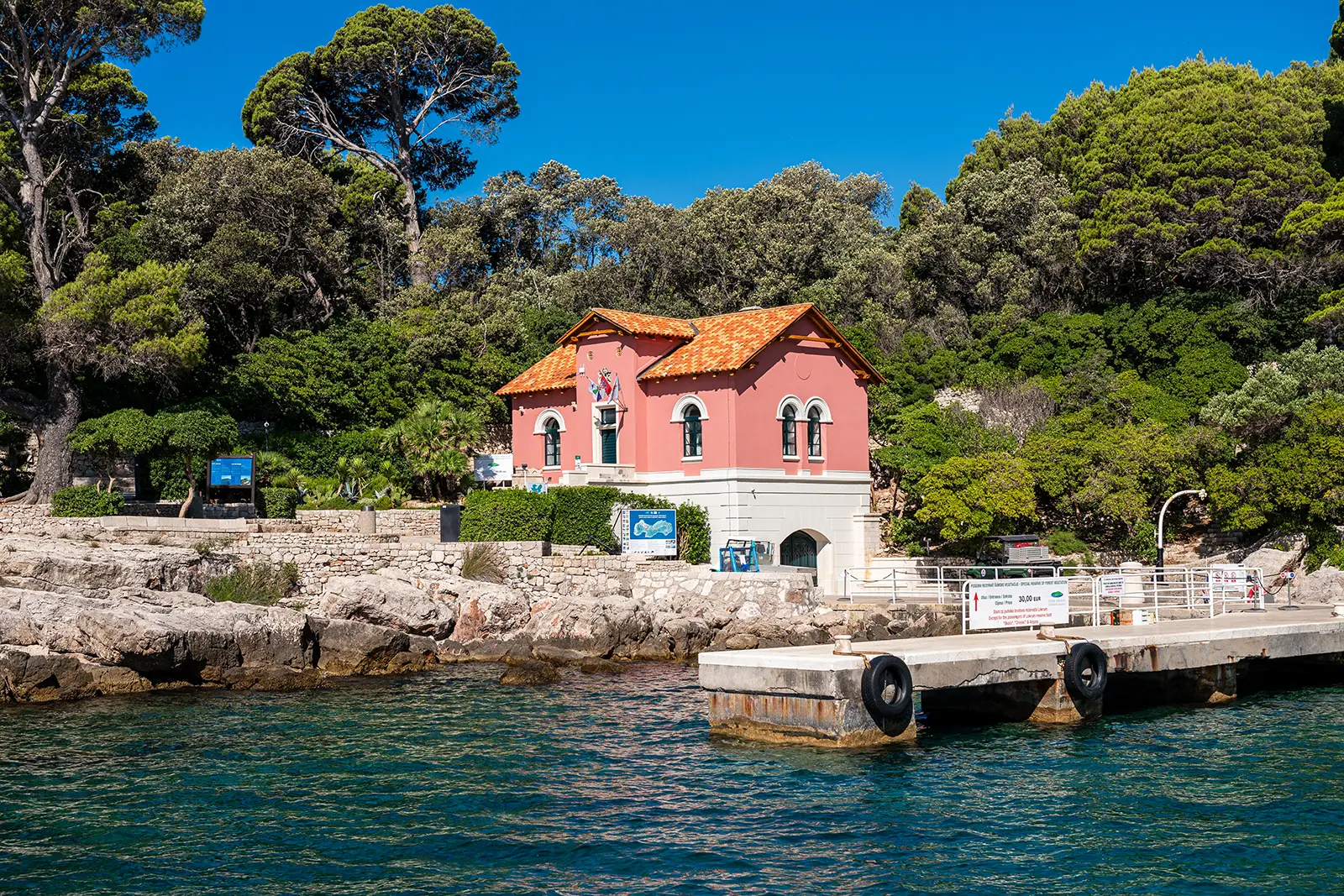
At the same time, in the same style, the Forester’s House was built in Portoč.
At the same time, in the same style, the Forester’s House was built in Portoč.
After the island's function changed, the existing cisterns couldn't provide enough water for the summer villa and the cultivated area. A LARGE WATER RESERVOIR and the CHARLOTTE'S WELL were constructed, while the SMALL WATER RESERVOIR is older and was built when the French ruled the island and the FORT ROYAL was erected.
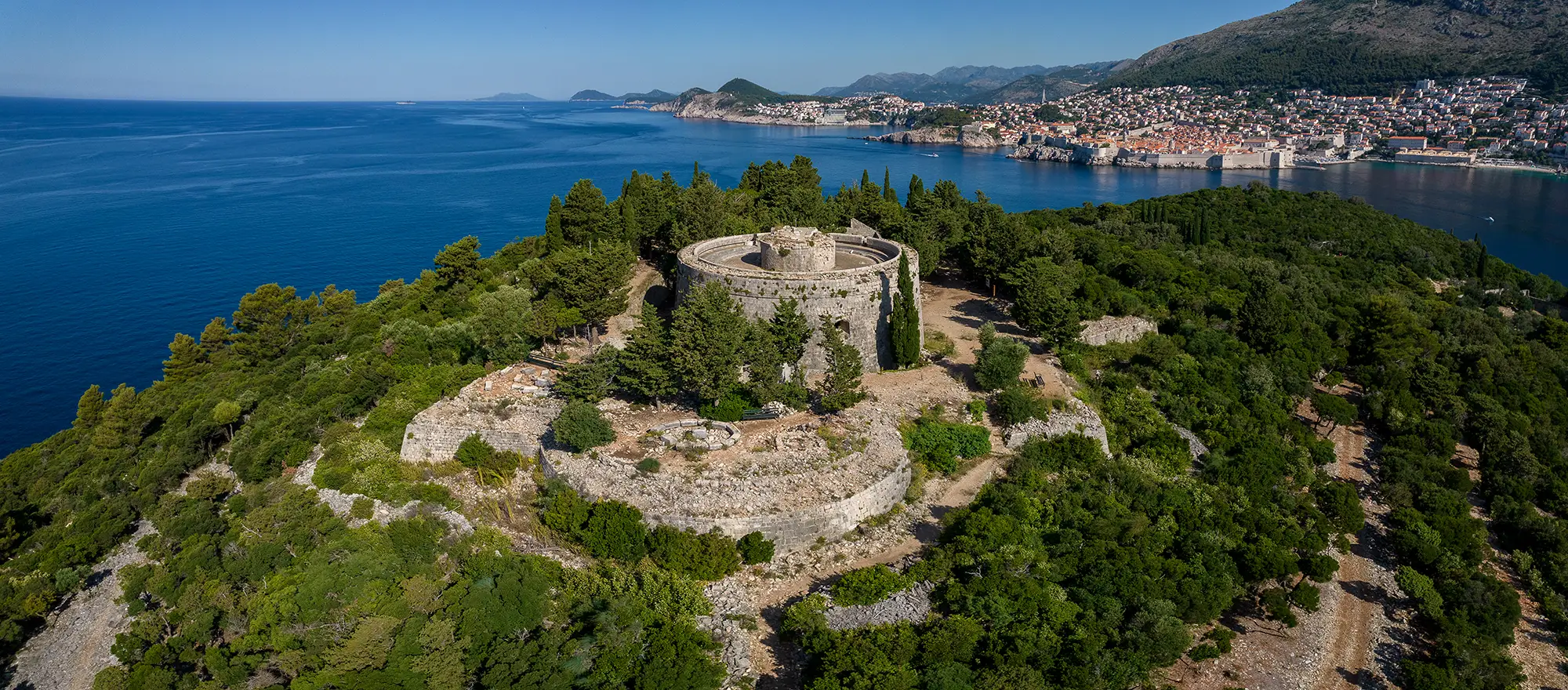
Immediately after taking Dubrovnik in 1806, the French army started the construction of a fort on Lokrum due to the strategic importance of the island. The fort was erected on the hill Glavice (97 m) as a spacious battery with walls, ramparts, and ditches. The Fort Royal was also used by the Austrian army which extensively added to it during the 1830s.
The circular fort consists of an antemural with towers and the main circular fortification, later called the Tower of Maximilian, although Maximilian I didn't have anything to do with the construction.
Immediately after taking Dubrovnik in 1806, the French army started the construction of a fort on Lokrum due to the strategic importance of the island. The fort was erected on the hill Glavice (97 m) as a spacious battery with walls, ramparts, and ditches. The Fort Royal was also used by the Austrian army which extensively added to it during the 1830s.
The circular fort consists of an antemural with towers and the main circular fortification, later called the Tower of Maximilian, although Maximilian I didn't have anything to do with the construction.
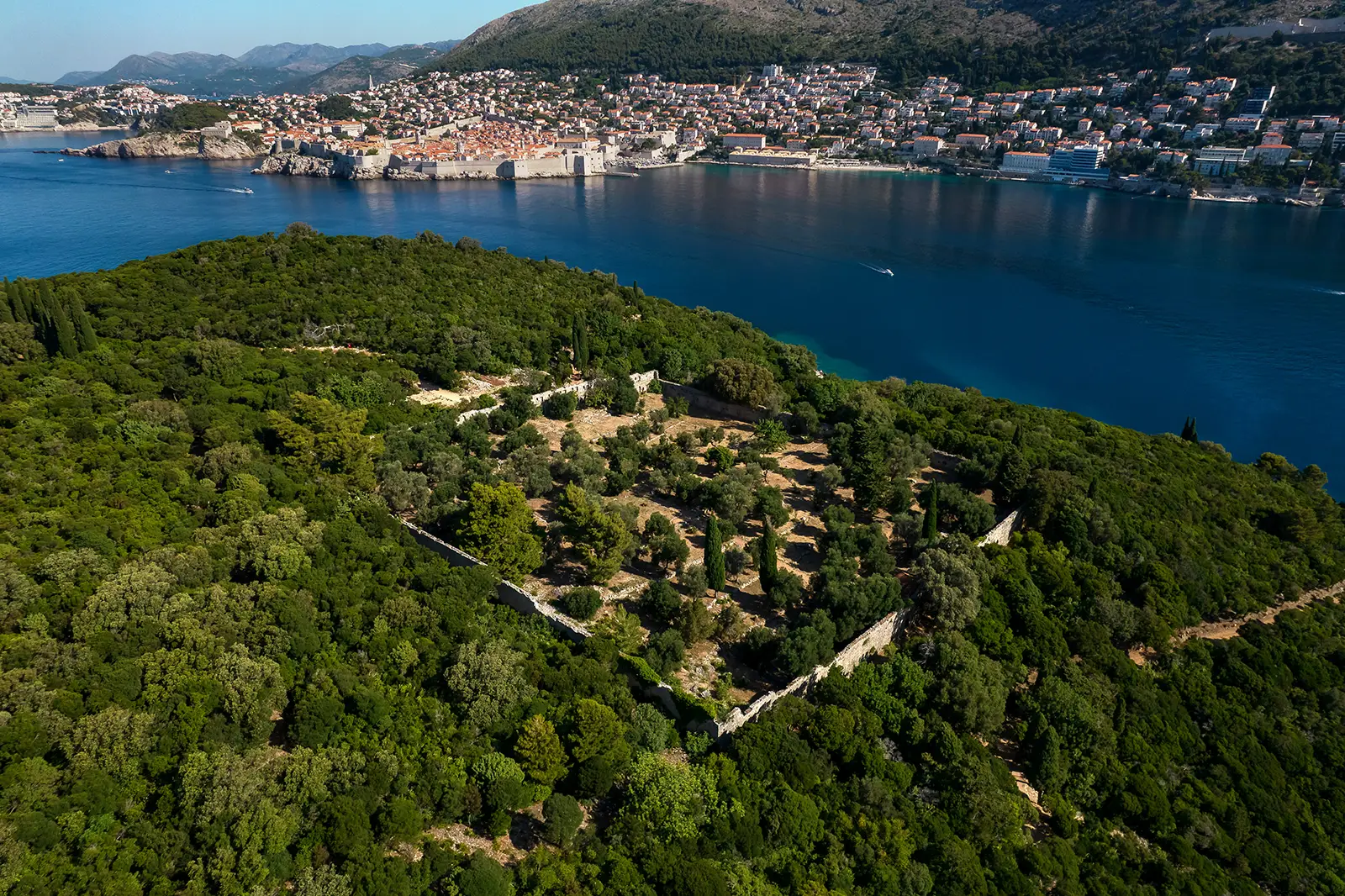
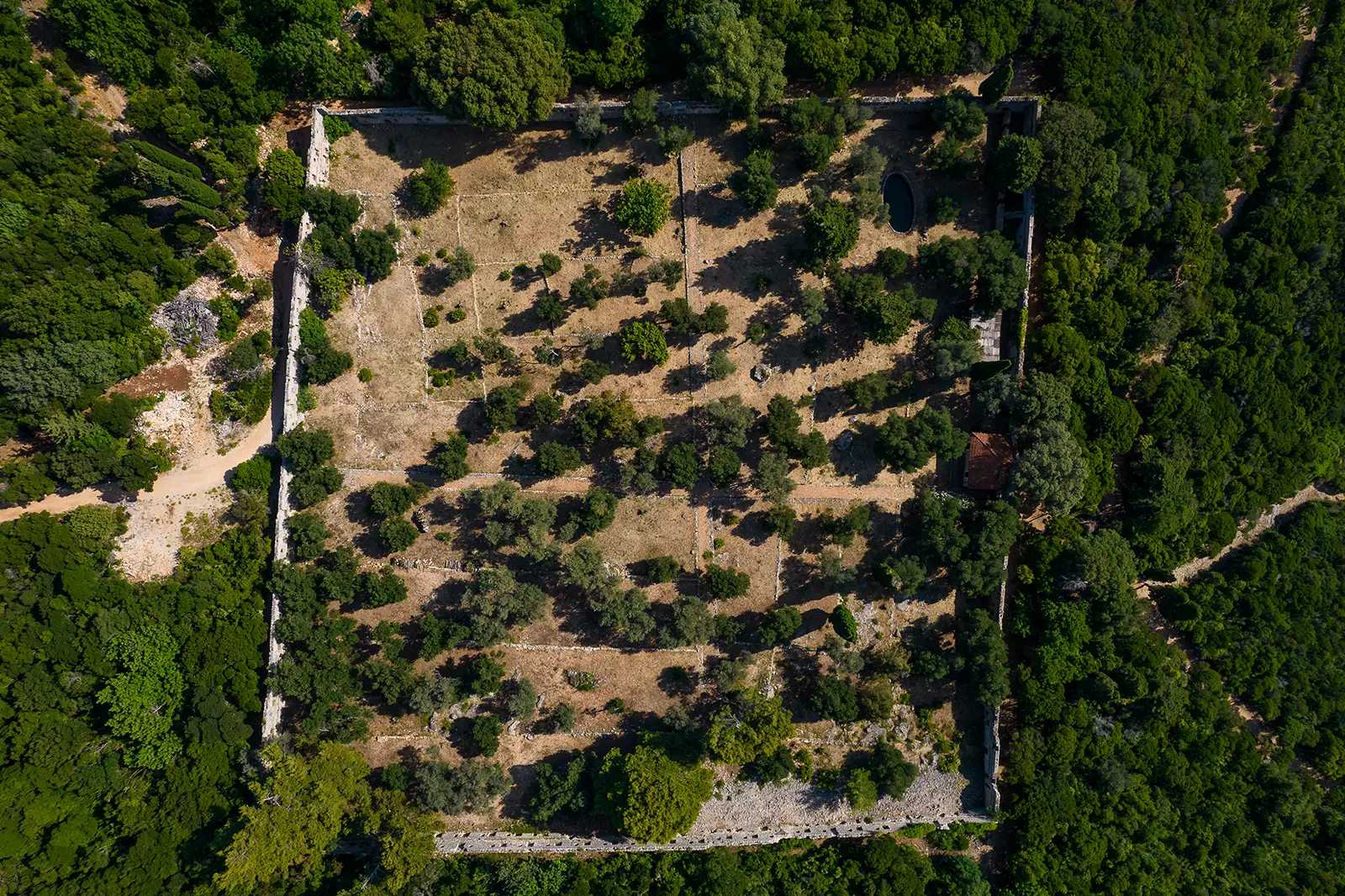
The LAZARET complex was erected between 1534 and 1557 at the order of the Senate of the Dubrovnik Republic for protection against infectious diseases.
The Lazaret had a square plan and double walls. The main gate (today walled up) was located in the north wall and above it the building inscription was engraved in 1557. The Lazaret also had premises for traders, sailors and passengers.
The Lazaret was never completed since the Republic gave up on the construction at the end of the 16th century for strategic reasons. Since the fortified Lazaret could have served as a base for the invaders, the Republic started erecting the new lazaret at Ploče, near the town. A part of the Lazaret was torn down at the Senate’s order in 1647 and its stones were used to fortify the town walls. But the overgrown walls of the Lokrum Lazaret continued to fuel the locals’ imagination and a story was born.
The Lazaret was never completed since the Republic gave up on the construction at the end of the 16th century for strategic reasons. Since the fortified Lazaret could have served as a base for the invaders, the Republic started erecting the new lazaret at Ploče, near the town. A part of the Lazaret was torn down at the Senate’s order in 1647 and its stones were used to fortify the town walls. But the overgrown walls of the Lokrum Lazaret continued to fuel the locals’ imagination and a story was born.
The TRITON’S CROSS above Skalica Bay was erected in the memory of the sailors of the Austrian Navy ship Triton, which had anchored in front of Lokrum, who died on May 9, 1859 in a huge explosion. Out of the whole crew only ten men survived, and stories told in villages and in the town mostly focused on the rescue of the punished and chained sailor, whom some held responsible for the accident itself.
The tragedy brought to Dubrovnik and Lokrum the emperor’s brother, Archduke Ferdinand Maximilian of Habsburg, a wanderer, poet and a lover of nature, and the Navy’s commander at the time. Where the investigation led to is not certain, but Maximilian engraved the names of dead sailors on the cross erected in their memory. Moved by the event and the wonders he witnessed because of it, the archduke bought the island he fell in love with at first sight.
The old Lokrum harbor, SKALICA, can probably be found in another sea tale. This, perhaps the oldest story about Lokrum, is full of royal brilliance, crusading adventures and the dangers of stormy seas. The protagonist’s name: Richard the Lion Heart.
Although Richard the Lion Heart hadn’t constructed the church on Lokrum, the documents from the 13th century mention three more churches, besides the basilica: St. Michael’s, St. Cyriacus’ and St. Elias’.
Today only the Gothic-Renaissance ANNUNCIATION CHAPEL (15th/16th century) remains standing near the entrance to the Botanical Garden.
The old Lokrum harbor, SKALICA, can probably be found in another sea tale. This, perhaps the oldest story about Lokrum, is full of royal brilliance, crusading adventures and the dangers of stormy seas. The protagonist’s name: Richard the Lion Heart.
Although Richard the Lion Heart hadn’t constructed the church on Lokrum, the documents from the 13th century mention three more churches, besides the basilica: St. Michael’s, St. Cyriacus’ and St. Elias’.
Today only the Gothic-Renaissance ANNUNCIATION CHAPEL (15th/16th century) remains standing near the entrance to the Botanical Garden.