Natural Values
The Untouched Beauty of Dubrovnik’s Green Jewel
LOKRUM ISLAND, SPECIAL RESERVE OF FOREST VEGETATION,
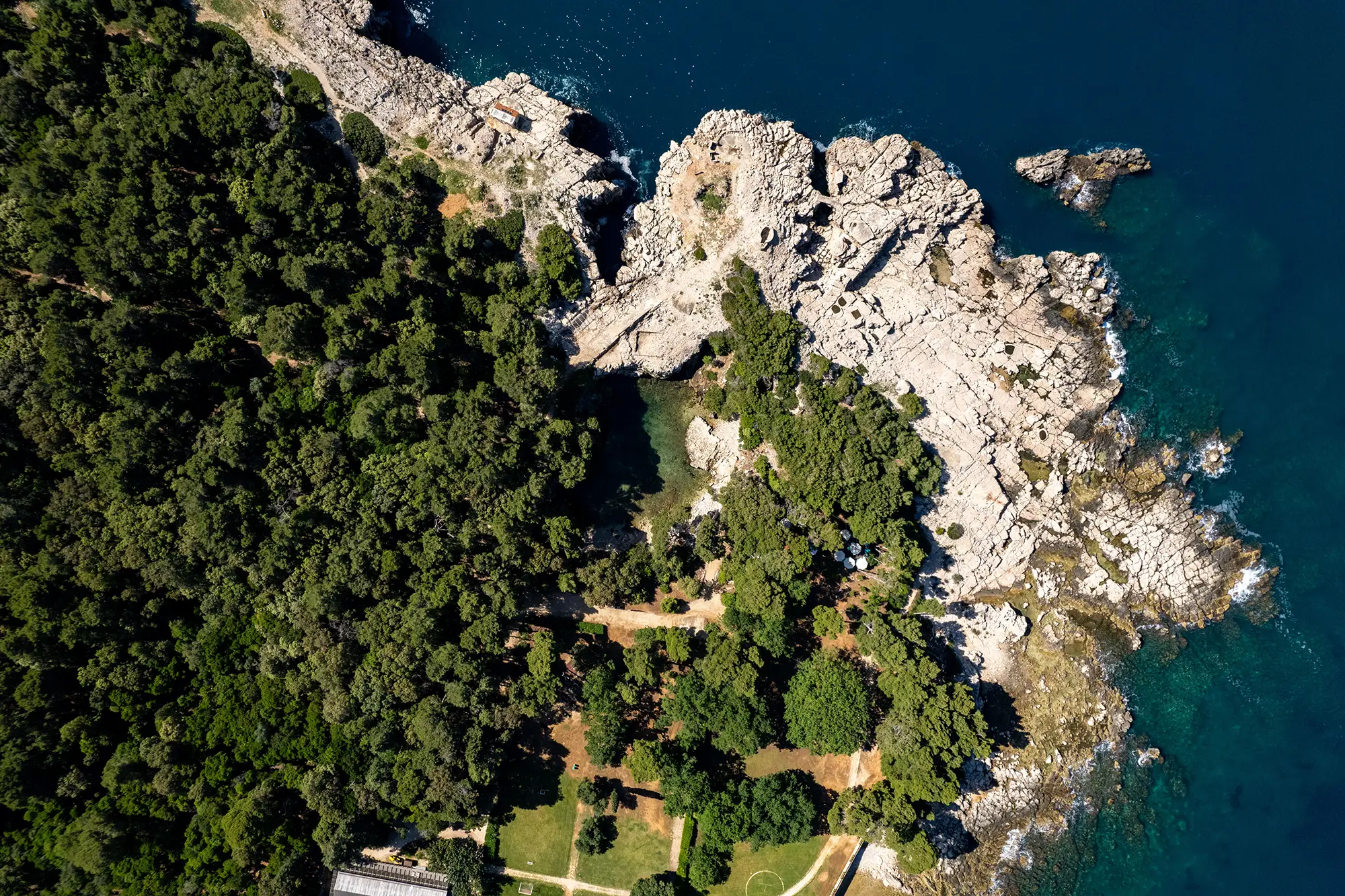
is protected in accordance with the Nature Protection Act in the special reserve of forest vegetation category since 1948, and as such is the third oldest protected nature area in Croatia whose basic phenomenon is forest vegetation covering about 90% of the island.
The vegetation cover is considered representative as all the growth series of plant communities of the southern phytogeographical area – Eumediterranean – are present on a very small surface area (72 ha), which is the main reason for the protection of this area of nature.
According to the Regulation on the Ecological Network, the entire island of Lokrum, including the belt of sea of about 150 meters from the coast, is also an area of the Natura 2000 ecological network (HR4000017 Lokrum) – a conservation area of importance for species and habitat types (POVS) for a total of eight habitat types.
The vegetation cover is considered representative as all the growth series of plant communities of the southern phytogeographical area – Eumediterranean – are present on a very small surface area (72 ha), which is the main reason for the protection of this area of nature.
According to the Regulation on the Ecological Network, the entire island of Lokrum, including the belt of sea of about 150 meters from the coast, is also an area of the Natura 2000 ecological network (HR4000017 Lokrum) – a conservation area of importance for species and habitat types (POVS) for a total of eight habitat types.
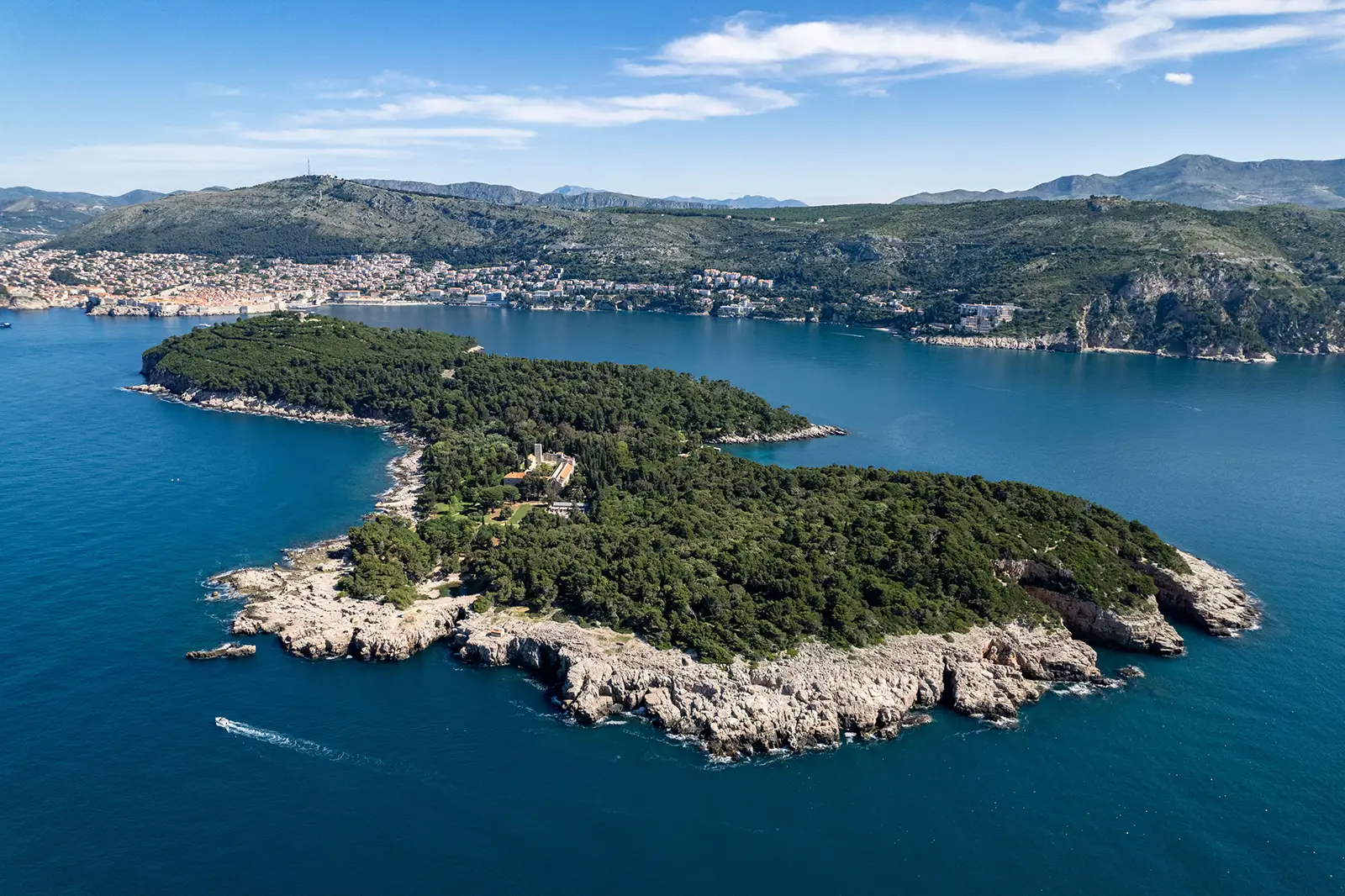
The area of the island of Lokrum is also an integral part of the Historic core of the City of Dubrovnik with the defensive walls and fortifications and the city moat, and is included in the UNESCO World Heritage List.
Lokrum Island and its waters are protected as a cultural good by the Decision on the Protection of the Historical Complex of the City of Dubrovnik and its Immediate Surroundings (Register of Cultural Goods of the Republic of Croatia - Code Z-3818) based on the Act on the Protection and Preservation of Cultural Goods. Zones were established in accordance with the same Decision on the Protection of the Historical Complex of the City of Dubrovnik and its Immediate Surroundings, and the island of Lokrum with its waters was included in the “A” zone, described as a “complete protection of historical structures”.
“NATURA 2000” HABITAT TYPES AT LOKRUM RESERVE
1.
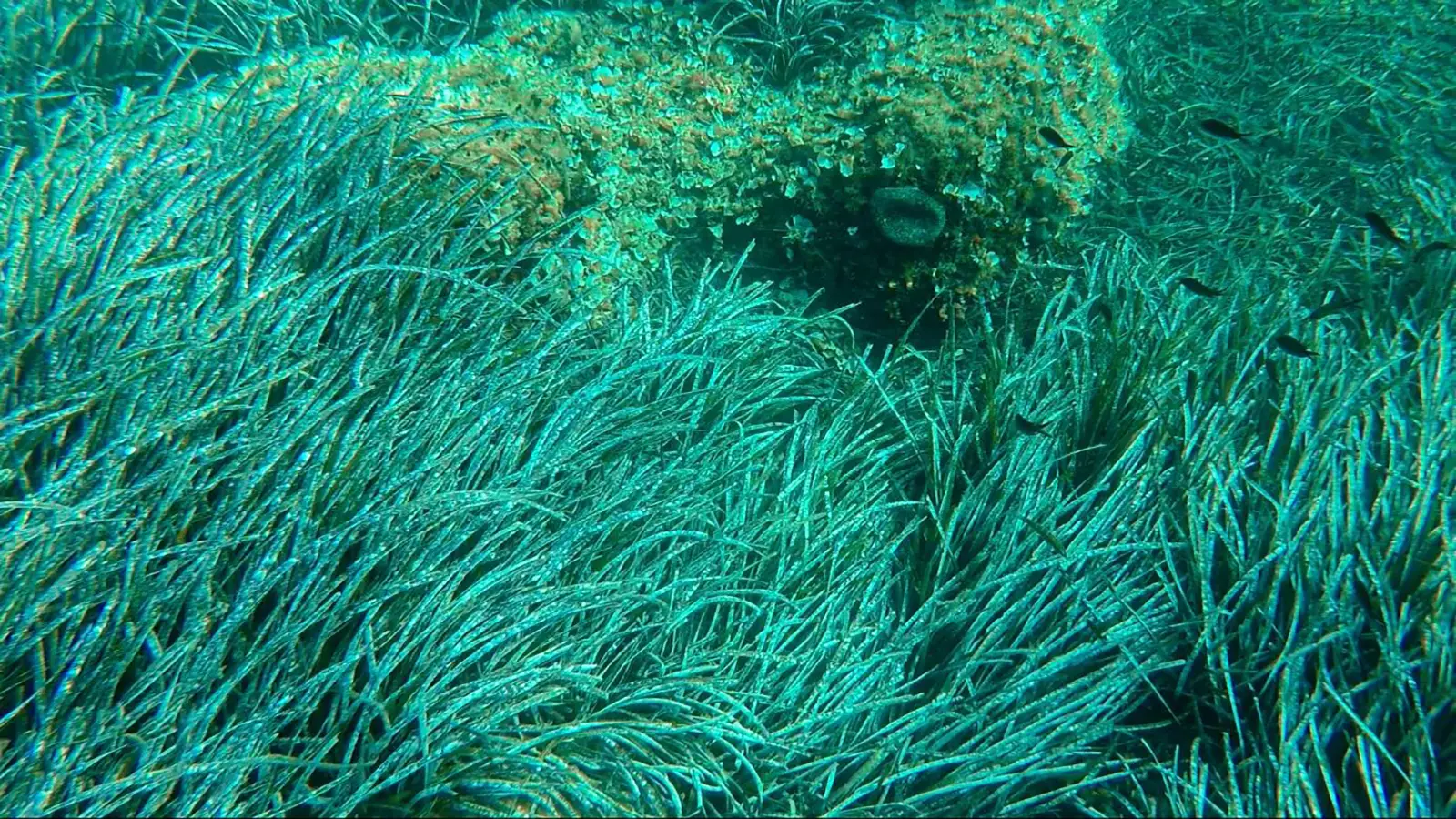
POSIDONIA BEDS (Posidonion oceanicae)
POSIDONIA OCEANICA (L.) DELILE is a seagrass species that is endemic to the Mediterranean Sea.
Posidonia grows in clean and clear waters, in the infralittoral zone from the surface of the sea to a depth of 40 m, and tolerates well exposure to waves and temperature variations but not reduced salinity and eutrophication. Posidonia beds are important for life in the sea as they are the habitat of many living organisms that find food and shelter in its meadows. It is threatened by many human activities (anchoring, pollution, etc.) and is particularly vulnerable because the restoration of potentially damaged habitats would take decades. Characteristic species for Posidonia beds are: the warty venus (Venus verrucosa), the Mediterranean red sea star (Echinaster sepositus), the seagrass asterina, (Asterina pancerii), the cotton-spinner (Holothuria tubulosa), the noble pen shell (Pinna nobilis) – strictly protected species, fish Sarpa salpa, Symphodus ocellatus and Syphodus rostratus.
Posidonia grows in clean and clear waters, in the infralittoral zone from the surface of the sea to a depth of 40 m, and tolerates well exposure to waves and temperature variations but not reduced salinity and eutrophication. Posidonia beds are important for life in the sea as they are the habitat of many living organisms that find food and shelter in its meadows. It is threatened by many human activities (anchoring, pollution, etc.) and is particularly vulnerable because the restoration of potentially damaged habitats would take decades. Characteristic species for Posidonia beds are: the warty venus (Venus verrucosa), the Mediterranean red sea star (Echinaster sepositus), the seagrass asterina, (Asterina pancerii), the cotton-spinner (Holothuria tubulosa), the noble pen shell (Pinna nobilis) – strictly protected species, fish Sarpa salpa, Symphodus ocellatus and Syphodus rostratus.
2.
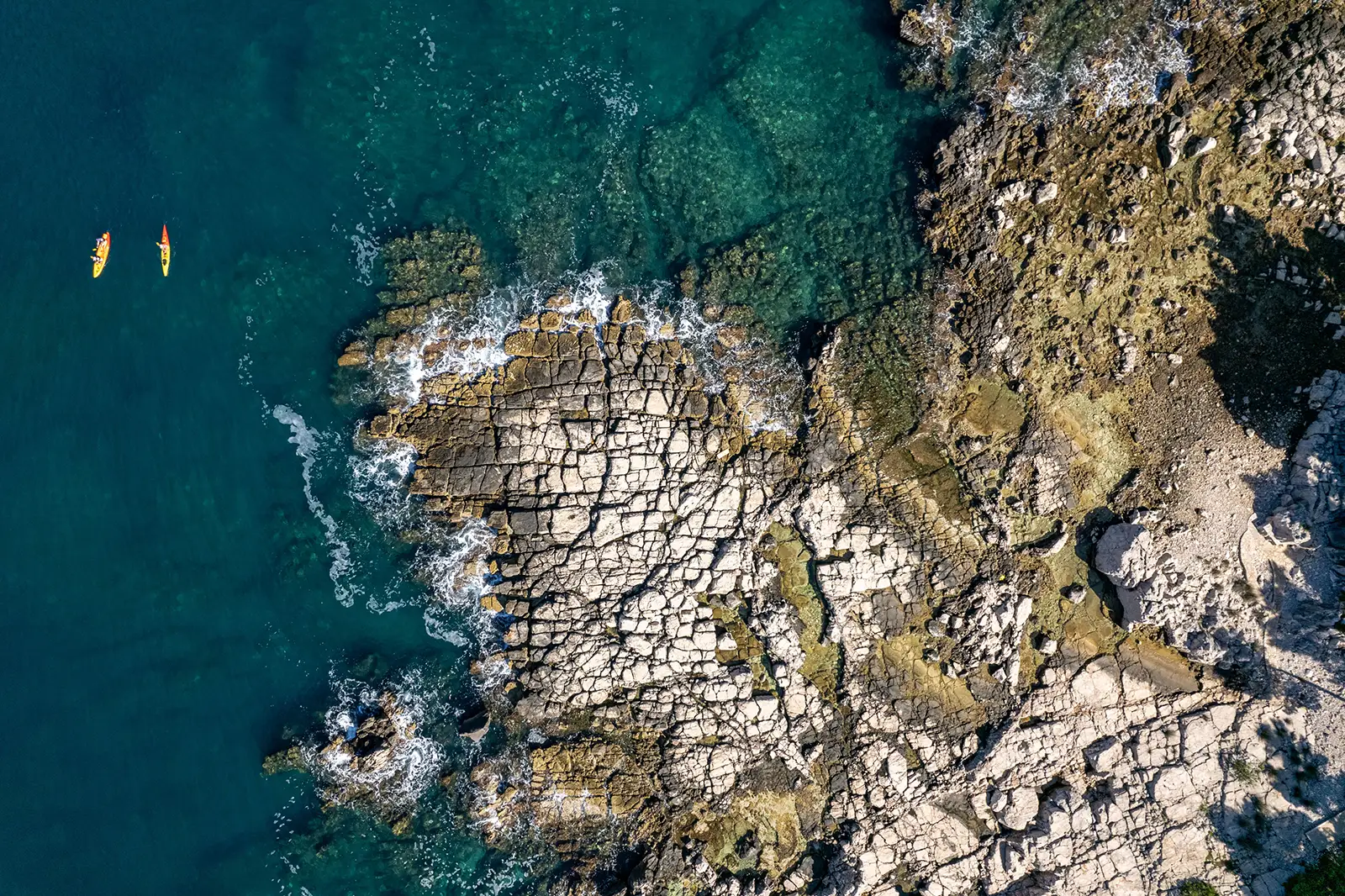
REEFS
Reefs are the most heterogeneous habitat type, encompassing habitats on a hard substrate from the surface of the sea to the bathyal, and can thus be of biogenic concretion or geogenic origin. Habitats can come into contact with terrestrial habitats on seaside rocks covered in vegetation (rocks and steeps of the Mediterranean coast overgrown with endemic species of Limonium ssp.), Posidonia beds and sea caves. Since they are present in a narrow strip along the coast, they are endangered due to exposure to human activities such as construction and sea-filling, concreting and levelling of the naturally uneven rocky shore. Characteristic species for this habitat type are sea snails (Melarhaphe nerioides), the beadlet anemone (Actinia equina), and limpets (Patella ssp.).
3.
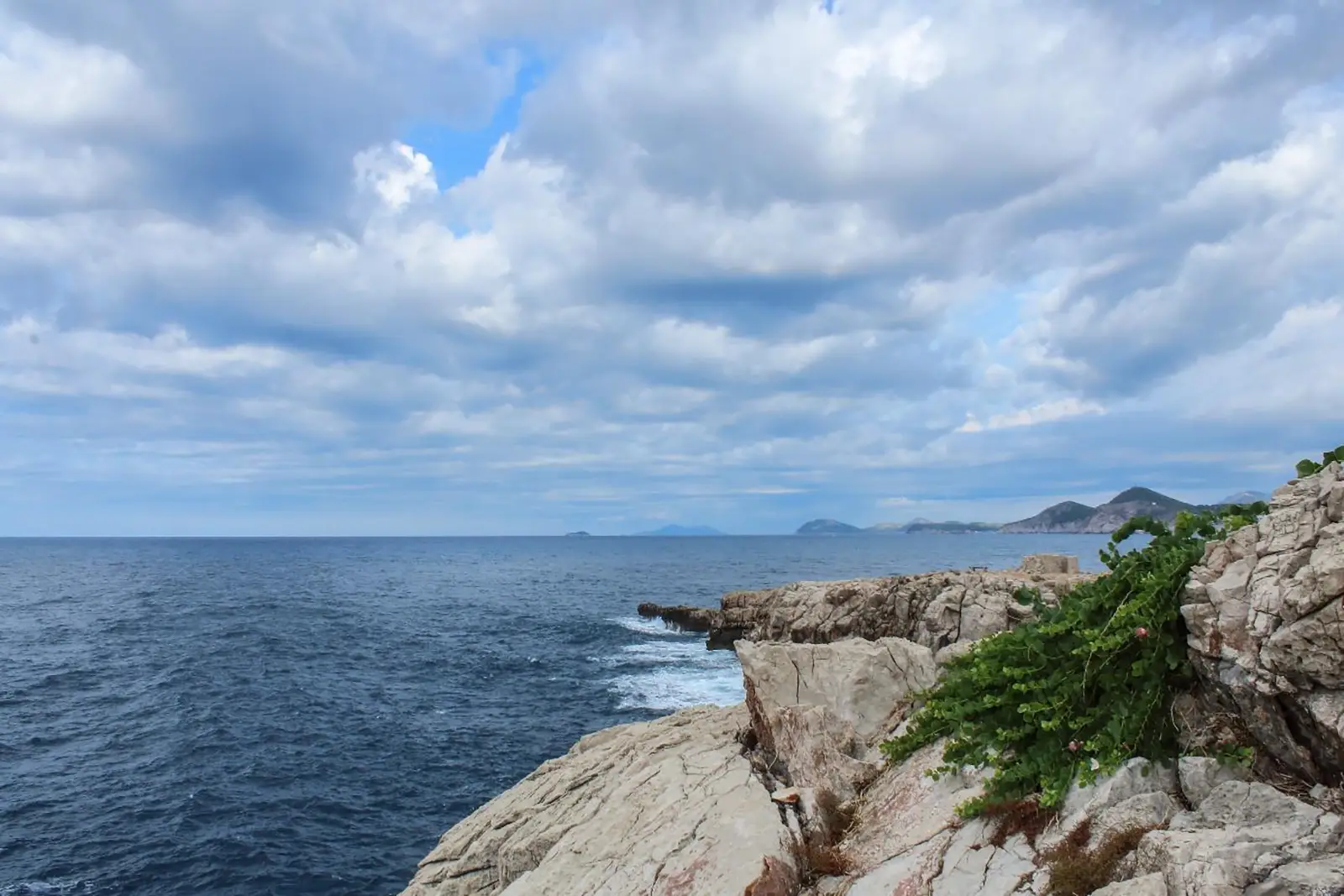
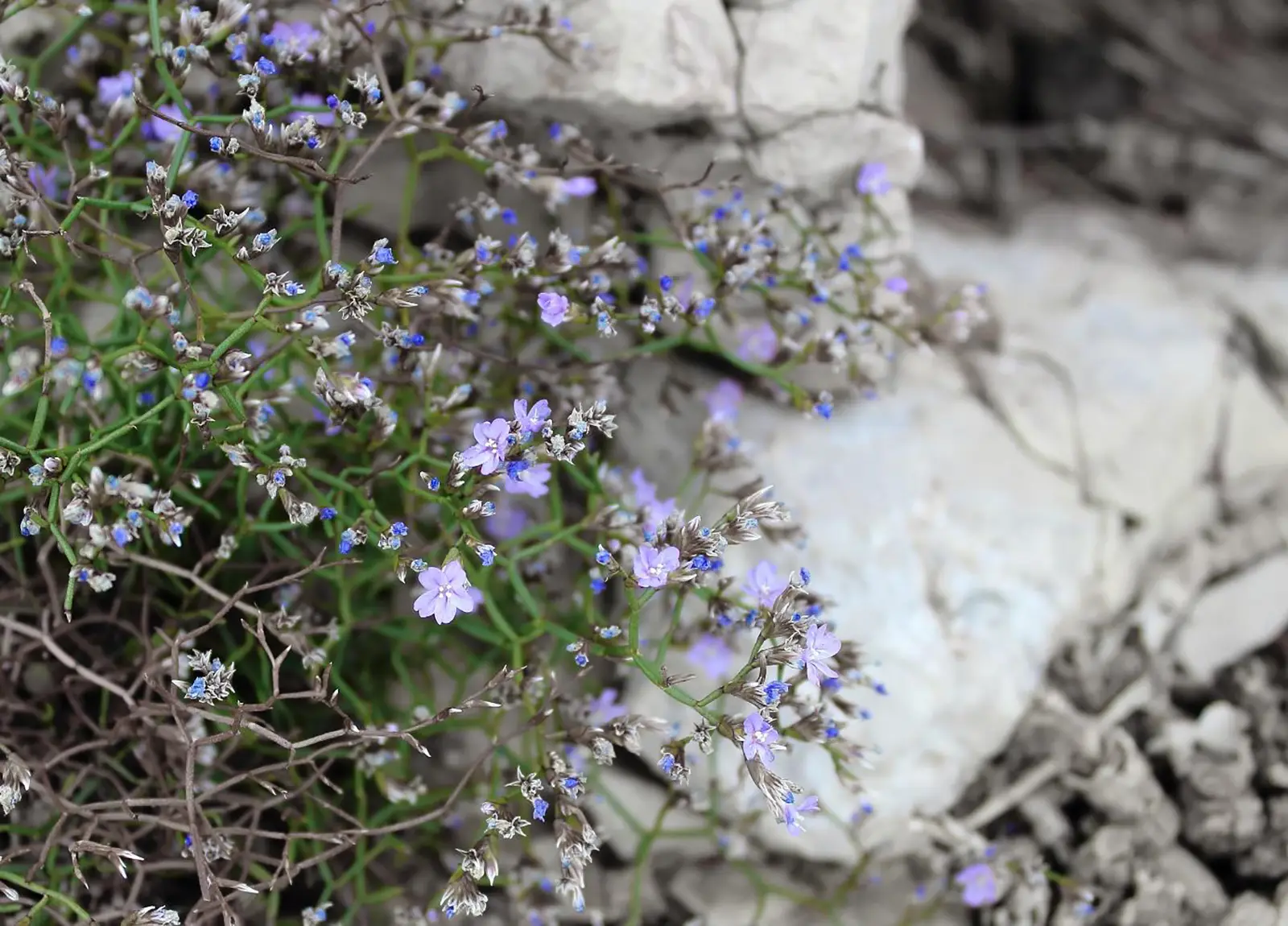
ROCKS AND STEEPS (CLIFFS) OF THE MEDITERRANEAN COAST OVERGROWN WITH THE ENDEMIC SPECIES Limonium spp.
The steeps and rocky shores of the island of Lokrum are overgrown with halophytic vegetation. The community of “grebenjača savitljive mrižice“ (As. Limonietum anfracti Ilijanić 1982) is significant for Lokrum. This relatively rare and endemic community was first described on Lokrum, and is present in southern Dalmatia on Mljet, Lokrum, Elafiti Islands, and other islands and islets of the Dubrovnik coast as well as in the coastal belt of Dubrovnik littoral. A typical species of this community is “savitljiva mrežica” – Limonium dictyophorum (syn. Limonium anfractum), while rock samphire (Crithmum maritimum), Grey Bird's-foot-trefoil (Lotus cystoides), maidenstears (Silene vulgaris ssp. Angustifolia) and others are also present. On Lokrum, this community grows in the coastal belt along the entire coastline, but is less present on the western side of the island in the area where the cliffs are located, and only in a relatively narrow strip.
4.
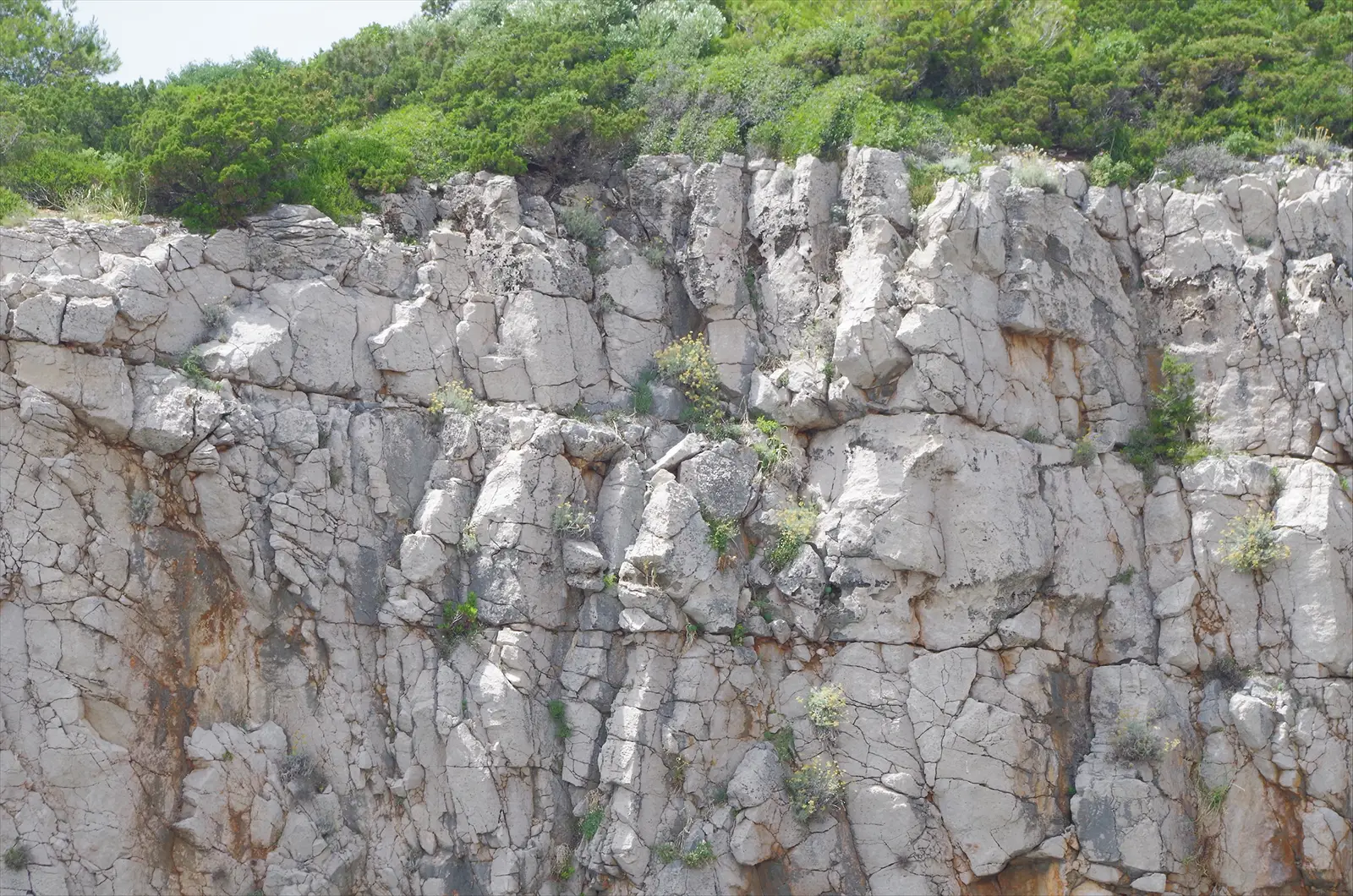
CARBONATE ROCKS WITH CHASMOPHYTIC VEGETATION
A vegetation habitat that develops in the cracks of dry limestone rocks and as fragmented in the walls of old buildings. Of the communities of this habitat on Lokrum, there is a significant community of “gorostasna šašika“ and “kalabrijska pogančina“ (Seslerio - Putorietum calabricae H-ić 1962) in the fortress walls, along with other characteristic species: the stinking madder (Putoria calabrica), the shortpod mustard (Brassica incana), “bjelušina” (Inula verbascifolia), etc. On Lokrum Island we can find it in a relatively small area on the rocks on the western side of the island, at heights that are beyond the reach of spray of waves during bad weather.
5.
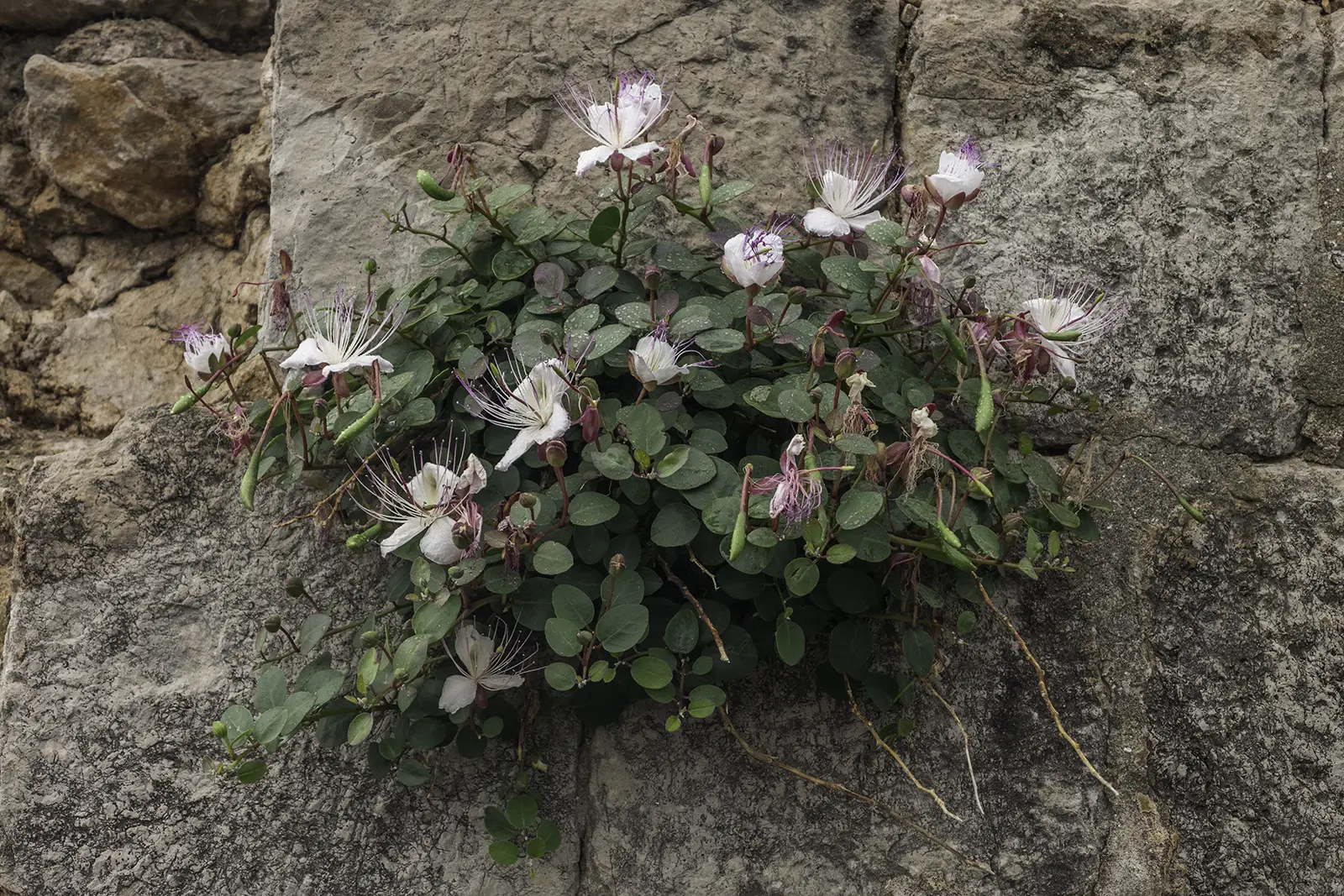
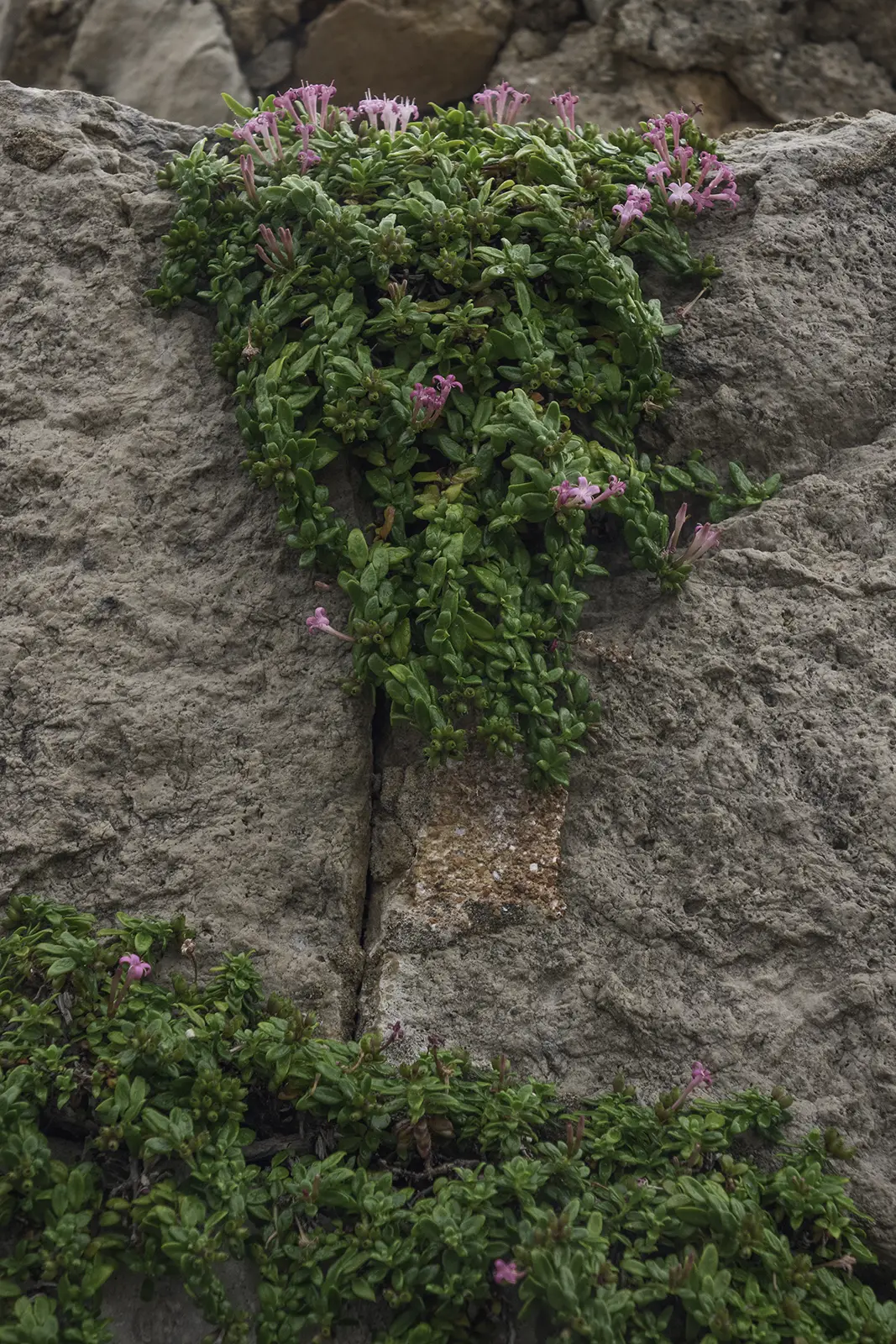
EUMEDITERRANEAN GRASSLANDS (Thero – Brachypodietea)
Eumediterranean grasslands are low grasslands composed of annual plants that generally complete their life cycle before summer droughts. The most significant community of Eumediterranean grasslands on Lokrum is the grassland of the yellow serradella and the rattail fescue (Ornithopodi - Vulpietum H-ić 1960), which was also described for the first time on Lokrum (locus classicus) with a rich composition of – “brčak” (Vulpia ligustica), the bird's-foot (Ornithopus compressus), the French oat grass (Gaudinia fragilis), the common cottonrose (Filago vulgaris), etc.
Photo: Boris Krstinić
Photo: Boris Krstinić
6.
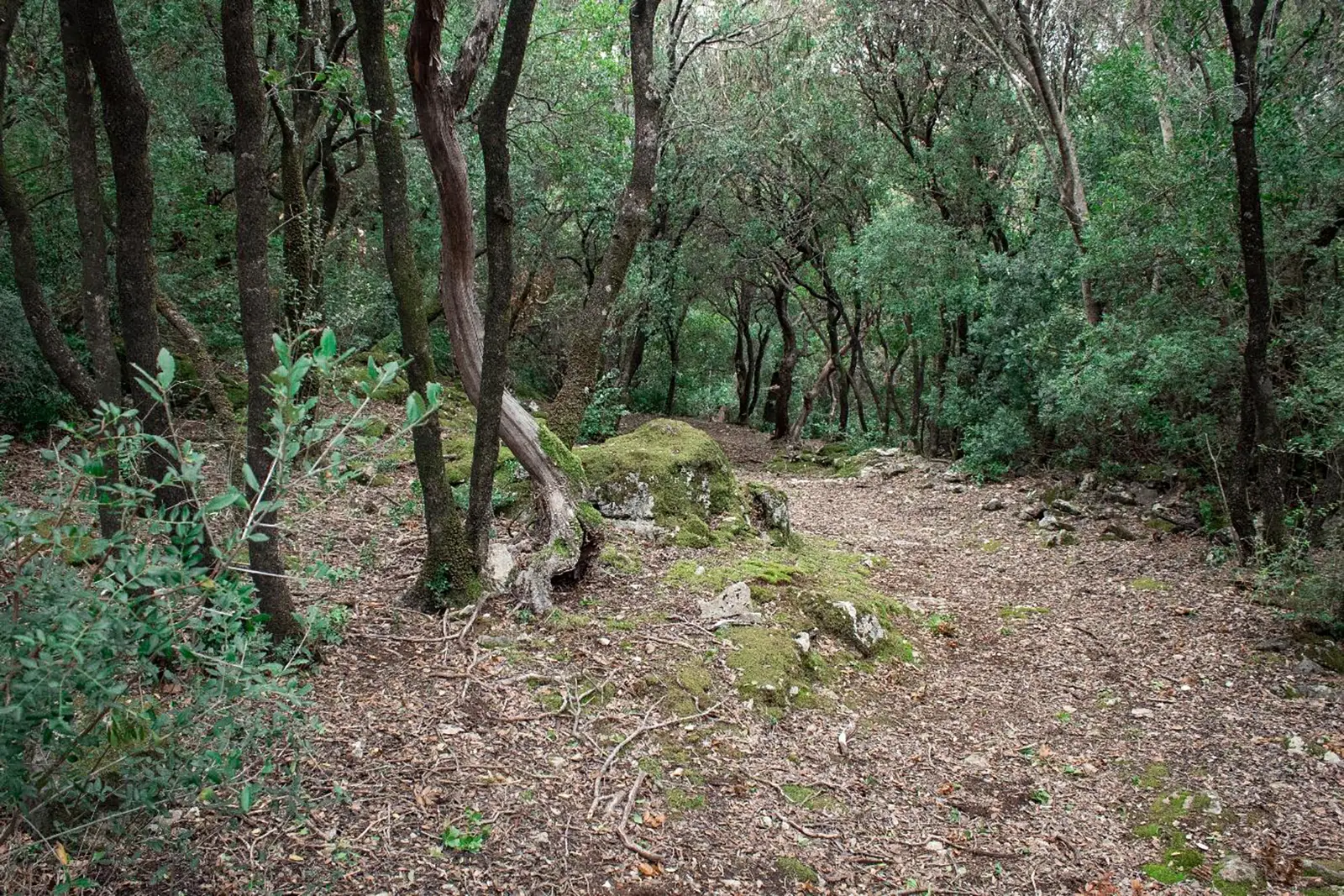
EVERGREEN FORESTS OF THE HOLM OAK (Quercus ilex)
Today, Mediterranean forests dominated by the holm oak (holly oak) rarely develop into high forests, but are mostly degraded to the macchia stage. From the mentioned forests, on Lokrum are present:
The holm oak and flowering ash forest (Fraxineto orni – Quercetum ilicis) with the most significant species being: the holm oak (Quercus ilex), the flowering ash (Fraxinus ornus), the laurustine (Viburnum tinus), the tree heath (Erica arborea), the Irish strawberry tree (Arbutus unedo), the green olive tree (Phillyrea latifolia), etc. On the island of Lokrum we find this community in the interior of the southern part of the island and can recognize it by the flowering ash trees which distinguish it from the other forest communities on the island.
The holm oak forest with myrtle (Myrto – Quercetum ilicis) – a holm oak forest in its degradation stage of macchia, a dense, almost impassable community in which, besides trees and shrubs, vines are particularly present, and the layer of ground vegetation is almost non-existent. Besides the holm oak (Quercus ilex), the mastic tree (Pistacia lentiscus) also grows here as well as the common myrtle (Myrtus communis), the large-fruited juniper (Juniperus oxycedrus ssp. Macrocarpa), the strawberry tree (Arbutus unedo), the tree heath (Erica arborea), the evergreen honeysuckle (Lonicera implexa), the rough bindweed (Smilax aspera), the wild asparagus (Asparagus acutifolius), and other evergreens. On Lokrum, this community is copiously present in the form of forests and macchia.
The holm oak and flowering ash forest (Fraxineto orni – Quercetum ilicis) with the most significant species being: the holm oak (Quercus ilex), the flowering ash (Fraxinus ornus), the laurustine (Viburnum tinus), the tree heath (Erica arborea), the Irish strawberry tree (Arbutus unedo), the green olive tree (Phillyrea latifolia), etc. On the island of Lokrum we find this community in the interior of the southern part of the island and can recognize it by the flowering ash trees which distinguish it from the other forest communities on the island.
The holm oak forest with myrtle (Myrto – Quercetum ilicis) – a holm oak forest in its degradation stage of macchia, a dense, almost impassable community in which, besides trees and shrubs, vines are particularly present, and the layer of ground vegetation is almost non-existent. Besides the holm oak (Quercus ilex), the mastic tree (Pistacia lentiscus) also grows here as well as the common myrtle (Myrtus communis), the large-fruited juniper (Juniperus oxycedrus ssp. Macrocarpa), the strawberry tree (Arbutus unedo), the tree heath (Erica arborea), the evergreen honeysuckle (Lonicera implexa), the rough bindweed (Smilax aspera), the wild asparagus (Asparagus acutifolius), and other evergreens. On Lokrum, this community is copiously present in the form of forests and macchia.
7.
MEDITERRANEAN FORESTS OF ENDEMIC PINES
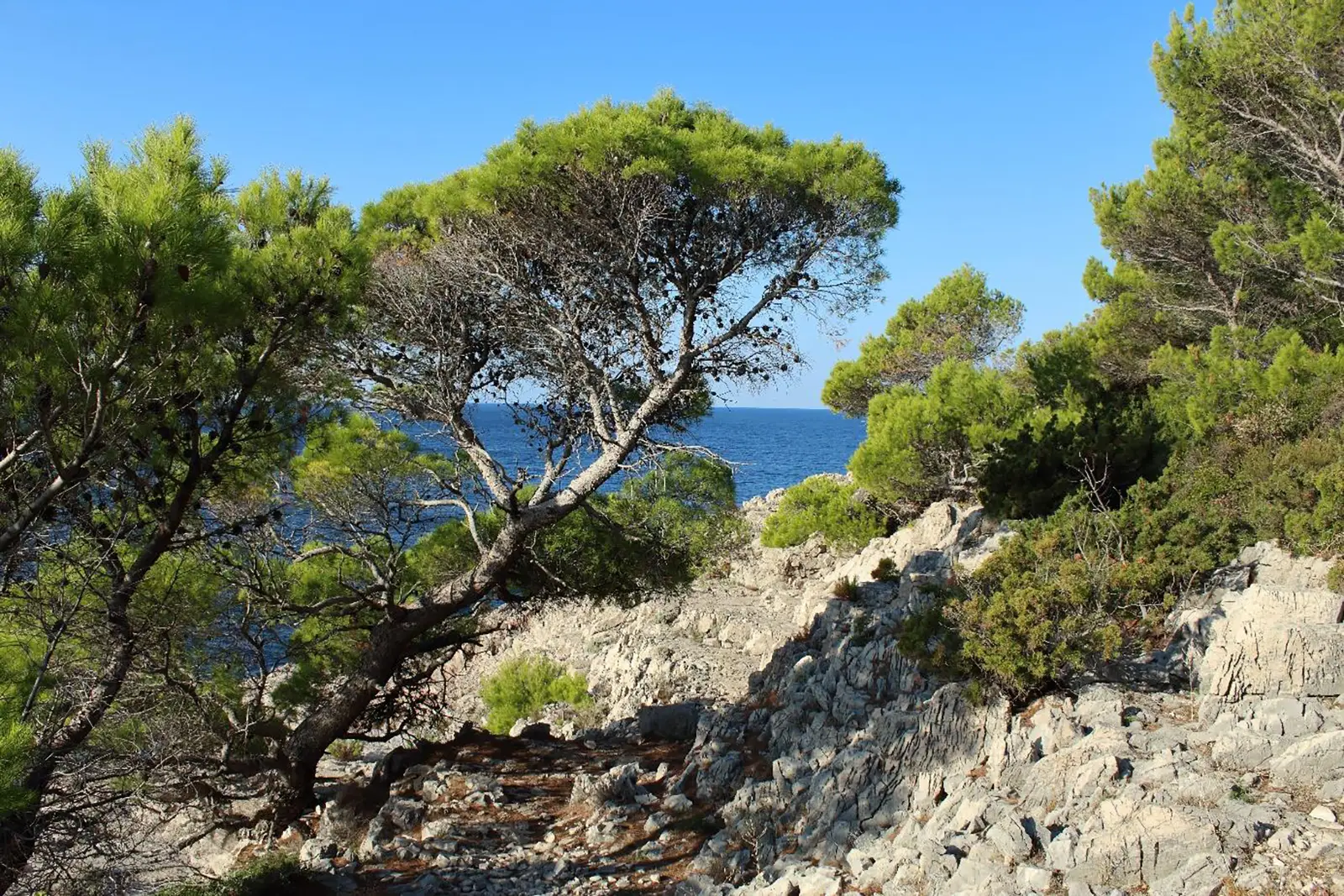
The habitat includes Aleppo pine or stone pine forests (whose forests are present only on the island of Mljet). Of the Mediterranean forests of Aleppo pine, on Lokrum are significant the following:
The Aleppo pine and holm oak forest (Querco ilici–Pinetum halepensis) belongs to the most endangered forests of the Mediterranean – mostly due to fires and prejudices of the local population about the harmfulness of the Aleppo pine. These stands have a great social, aesthetic and ecological role. The main species of the community is the Aleppo pine (Pinus halepensis), in the layer of shrubs and low trees are the holm oak (Quercus ilex), the mastic tree (Pistacia lentiscus), the laurustine (Viburnum tinus), the common myrtle (Myrtus communis), the rough bindweed (Smilax aspera), the wild asparagus (Asparagus acutifolius), the butcher’s-broom (Ruscus aculeatus), and other herbaceous and woody species. On Lokrum, this community is copiously present in the interior of the southern and central part of the island and on the eastern and northern slopes of the northern part of the island. The community is present in the coastal strip of the island, from the southeast across the south to the southwest coast of the island.
The Aleppo Pine Forest with Mastic Tree (As. Junipero phoeniceae–Pinetum halepensis, Trinajstić, 1988.) It is predominantly composed of Aleppo pine (Pinus halepensis) and mastic tree (Pistacia lentiscus), while other shrub species present include laurustinian (Viburnum tinus), myrtle (Myrtus communis), twining honeysuckle (Lonicera implexa), mock privet (Phillyrea sp.), wild madder (Rubia peregrina), common smilax (Smilax aspera), holm oak (Quercus ilex), and others. On Lokrum, this plant community is found in the coastal belt from the southeastern and southern to the southwestern shore of the island.
The Aleppo pine and holm oak forest (Querco ilici–Pinetum halepensis) belongs to the most endangered forests of the Mediterranean – mostly due to fires and prejudices of the local population about the harmfulness of the Aleppo pine. These stands have a great social, aesthetic and ecological role. The main species of the community is the Aleppo pine (Pinus halepensis), in the layer of shrubs and low trees are the holm oak (Quercus ilex), the mastic tree (Pistacia lentiscus), the laurustine (Viburnum tinus), the common myrtle (Myrtus communis), the rough bindweed (Smilax aspera), the wild asparagus (Asparagus acutifolius), the butcher’s-broom (Ruscus aculeatus), and other herbaceous and woody species. On Lokrum, this community is copiously present in the interior of the southern and central part of the island and on the eastern and northern slopes of the northern part of the island. The community is present in the coastal strip of the island, from the southeast across the south to the southwest coast of the island.
The Aleppo Pine Forest with Mastic Tree (As. Junipero phoeniceae–Pinetum halepensis, Trinajstić, 1988.) It is predominantly composed of Aleppo pine (Pinus halepensis) and mastic tree (Pistacia lentiscus), while other shrub species present include laurustinian (Viburnum tinus), myrtle (Myrtus communis), twining honeysuckle (Lonicera implexa), mock privet (Phillyrea sp.), wild madder (Rubia peregrina), common smilax (Smilax aspera), holm oak (Quercus ilex), and others. On Lokrum, this plant community is found in the coastal belt from the southeastern and southern to the southwestern shore of the island.
8.
SUBMERGED OR PARTIALLY SUBMERGED SEA CAVES
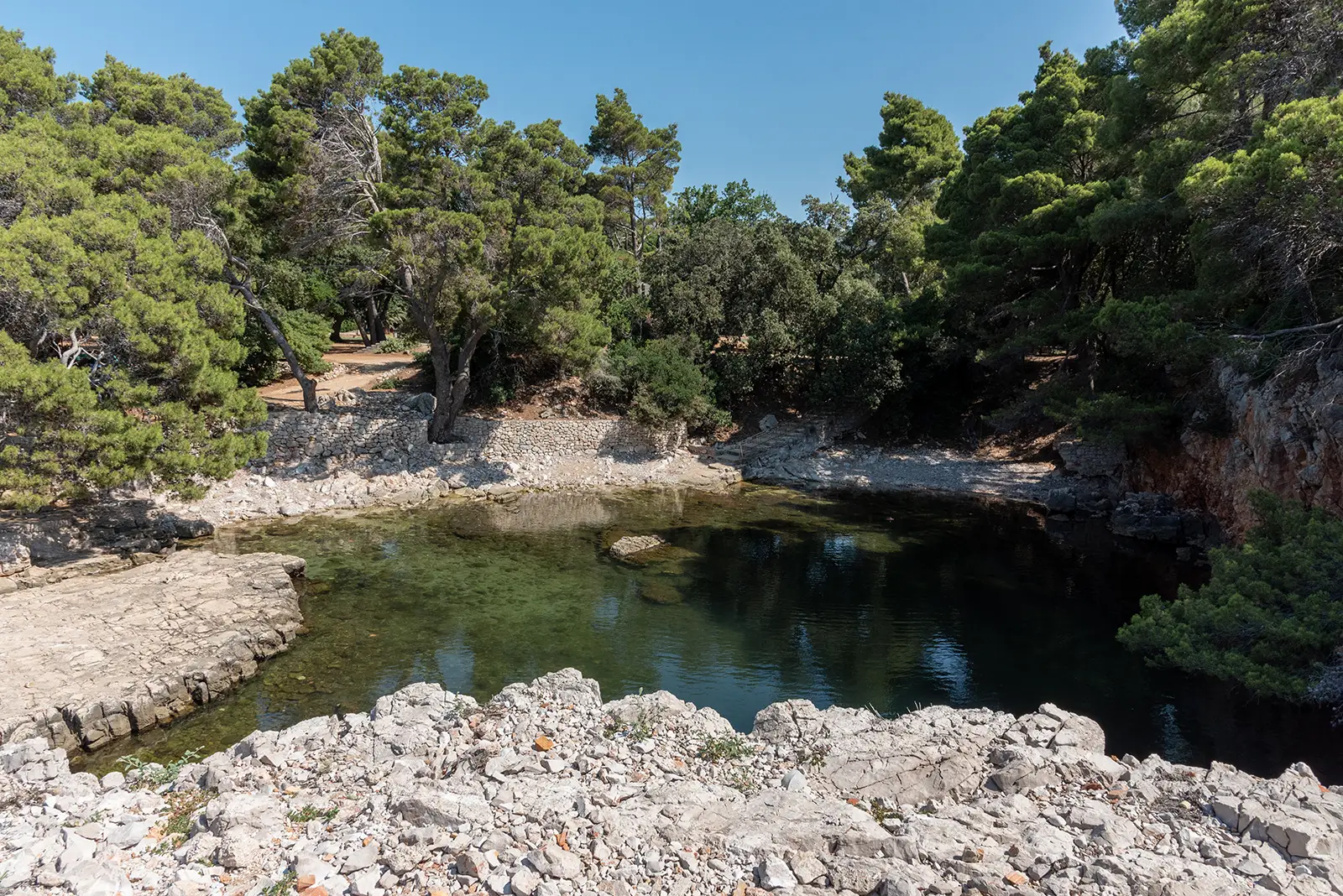
Due to karst features along the Croatian Adriatic coast, sea caves are numerous. These are caves or holes with underground lakes or smaller aquatic habitats, usually with limited exposure to external climatic conditions, and more or less connected to the sea. There is also a significant influence from terrestrial habitats. On Lokrum are located, as part of this habitat type, Vela špilja and Mala špilja, and on the southern part of the island is Mrtvo more – a former cave whose ceiling collapsed at one point, and which today has the shape of a small “lake” connected to the outside sea by a canal about 15 m long.